
Breeds · breed profile
Trakehner
The Trakehner, a sport horse with East Prussian origins
The Trakehner is a riding and sport horse that originated in East Prussia. Breeders select Trakehners particularly for dressage and eventing competitions. The breed’s studbook records horses and their parents. Its rules also allow certain crosses with Thoroughbreds, Arabians, Shagyas and Anglo-Arabians.
- Category
- Horse
- Country of origin
- Historic East Prussia
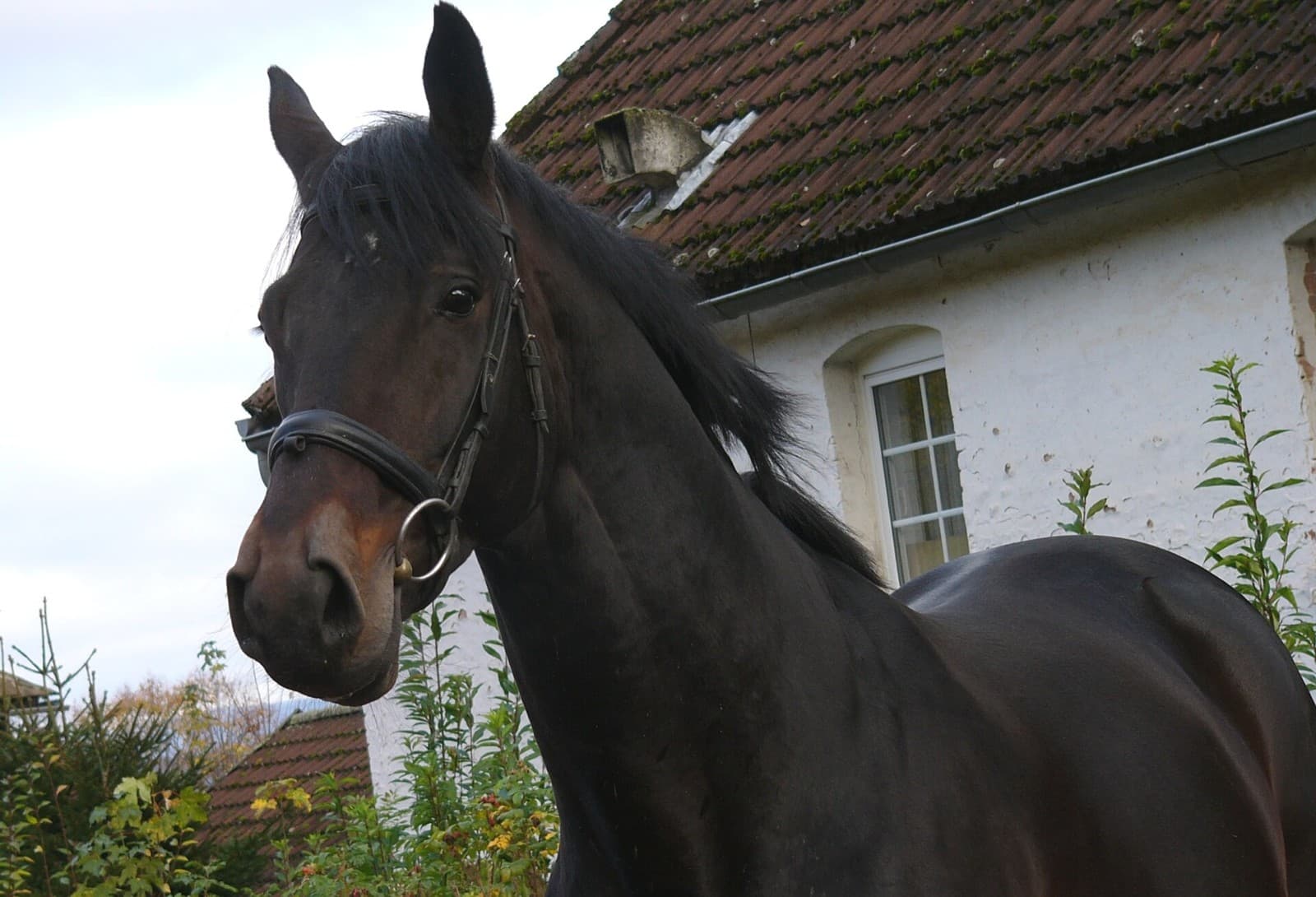
A Trakehner horse photographed outdoors.

The Trakehner’s history, from East Prussia to Germany
Trakehner breeding is closely linked to the stud at Trakehnen, founded in 1732 by royal Prussian decree. Breeders used Thoroughbreds and horses of Arabian ancestry to help develop the breed. After the Second World War, they rebuilt breeding mainly in Germany with the surviving horses. East Prussia is therefore the breed’s place of origin, while Germany became its main breeding centre after the war.
Sources for this section: Trakehner Verband [1]
The build and movement sought in a Trakehner
The Trakehner Verband, the association responsible for the original studbook, describes the qualities sought in the breed in its April 2025 breeding programme. This document gives a desired height of 1.60–1.70 m at the withers. It describes an expressive head, a well-shaped neck, a large sloping shoulder and defined withers. The back should support the horse’s movement, with a long, slightly sloping, muscular croup, clean joints and well-formed feet. During assessments, judges look at the rhythm, ground coverage, suppleness and balance of the walk, trot and canter.
Sources for this section: Trakehner Verband [1]
The Trakehner studbook accepts all coat colours
The Trakehner Verband’s breeding programme accepts all coat colours. Colour is recorded in a horse’s identification documents. To decide whether a horse can enter the Trakehner studbook and be approved for breeding, the association considers its ancestry and the requirements for conformation, movement and behaviour set out in its rules.
Sources for this section: Trakehner Verband [1]
Trakehners in dressage, eventing and jumping
Trakehners are bred for several equestrian disciplines, particularly dressage and eventing. In dressage, horse and rider perform precise movements that require balance and coordination. Eventing combines a dressage test, an outdoor cross-country course and show jumping. Judges also assess prospective Trakehner stallions over fences without a rider, known as loose jumping, to observe their approach and technique. Later ridden results add to these early assessments.
Sources for this section: Trakehner Verband [1]
How the Trakehner Verband manages the studbook
The Trakehner Verband keeps the original studbook, which records horses and their ancestry, and sets conditions for affiliated studbooks. Mating Trakehners with other Trakehners forms the basis of breeding, but the rules allow certain contributions from Thoroughbreds, Arabians, Shagyas and Anglo-Arabians. These are defined exceptions, rather than permission to use any European sport horse. Before approving a horse for breeding, the association considers its pedigree, conformation and the results of the required assessments.
Sources for this section: Trakehner Verband [1]
Trakehner breeding mares and stallions in the 2024 report
The Trakehner Verband’s April 2025 breeding programme quotes its 2024 annual report: 2,236 registered breeding mares and 132 registered breeding stallions in the population followed by the association. The count covers breeding animals in several European countries and affiliated breeders’ herds. It counts neither that year’s foals nor every living Trakehner worldwide.
Sources for this section: Trakehner Verband [1]
DNA parentage testing and genetic evaluation in the Trakehner
A parentage test compares DNA markers from a Trakehner foal with those of its reported parents to check the relationship. The result helps maintain reliable pedigrees. Genetic evaluation addresses a different question: it uses a horse’s performance and that of its relatives to help estimate the qualities it may pass on. These estimates do not guarantee its foals’ sporting results. Pedigree records also help breeders maintain different families, because post-war Trakehner breeding was rebuilt from a limited set of ancestors.
Sources for this section: Trakehner Verband [1]
Sources and review date
Profile reviewed on .
The documents below were used to prepare this profile of the Trakehner. They explain which animals can enter the studbook and how breeding animals are selected.
- Trakehner Verband — Zuchtprogramm, April 2025
Studbook document covering selection, registration, breeding assessments and dated figures where available.