
Breeds · breed profile
Trait du Nord
The Trait du Nord, a powerful draught horse from the Hainaut
The Trait du Nord is a large draught horse from the Hainaut near the Belgian border. Agriculture, transport and industry shaped its selection for traction. Conservation now combines replacement breeding, maintenance of several bloodlines and useful work for suitably trained horses.
- Category
- Horse
- Country of origin
- France
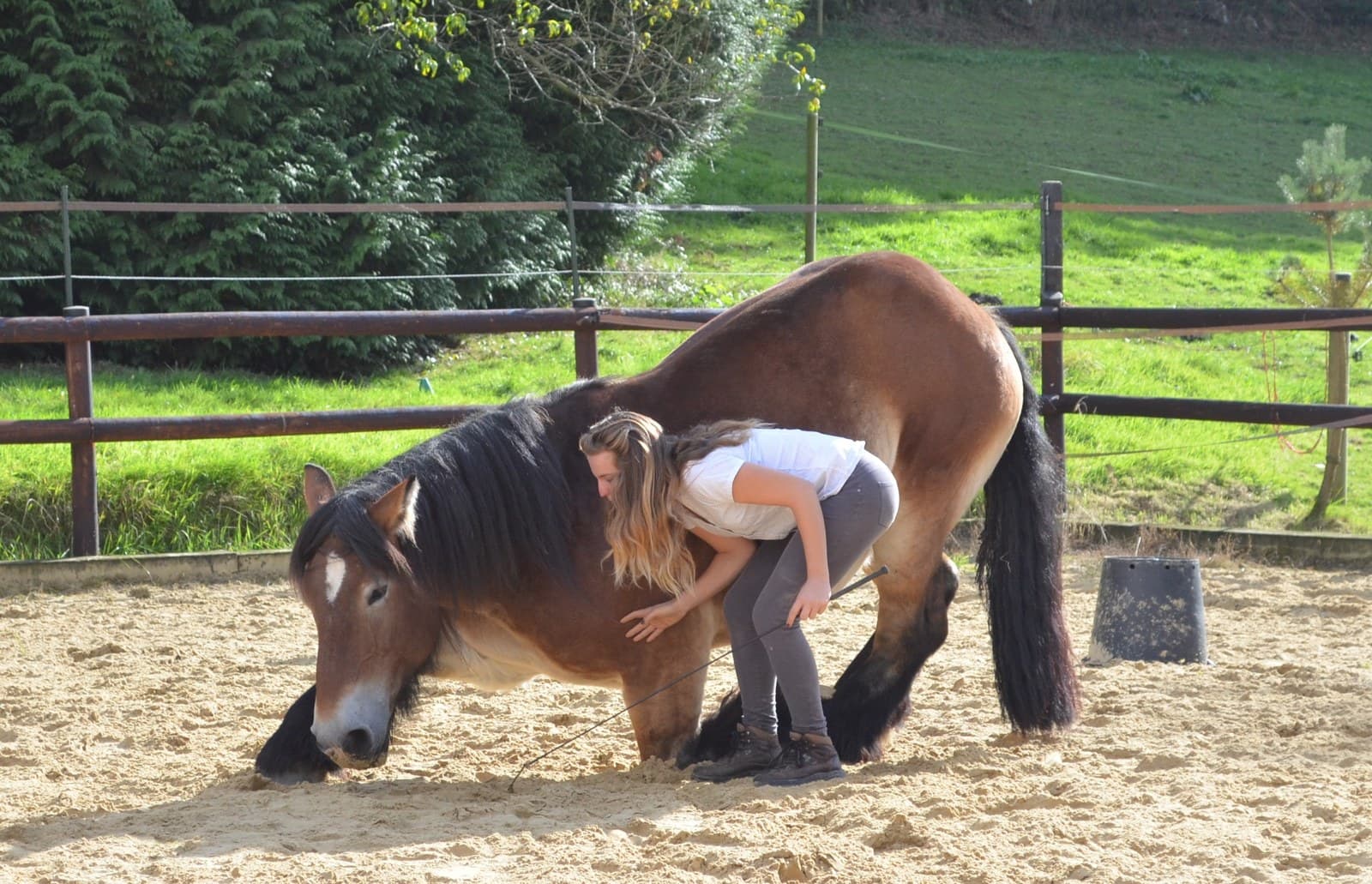
Ardèche du Don, a Trait du Nord mare performing a trained bow.

The Trait du Nord: a draught breed recognised in 1903
The Trait du Nord: Historical links with Belgian and Dutch heavy horses
The 2026 programme places the breed’s origins in French Hainaut and describes its close historical links with Belgian and Dutch draught horses. Nineteenth-century demand for traction favoured increasing size and muscular development. Recognition dates from 1903. Motorisation greatly reduced traditional work, and regional conservation plans later supported breeders and the development of new uses.
Sources for this section: Syndicat d’élevage du cheval Trait du Nord [1]
The Trait du Nord: a large, strongly muscled horse
The Trait du Nord: Power must remain functional
Syndicat d’élevage du cheval Trait du Nord describes the desired traits of the Trait du Nord in its breeding programme. This document guides the choice of breeding animals. The Trait du Nord breed standard describes heights around 1.68 m for mares and 1.75 m for stallions, with the heaviest males approaching 1,000 kg. A short back and loin, deep body and muscular hindquarters support the powerful outline. Limbs have substantial joints and broad feet. Movement and alignment are assessed alongside size because a large horse still needs to move and work effectively.
Sources for this section: Syndicat d’élevage du cheval Trait du Nord [1]
Coats found in the Trait du Nord
The Trait du Nord: a varied palette excluding pinto and white
The Trait du Nord breeding programme lists black, bay and chestnut shades, together with traditional terms such as chocolate, iron grey, roan and aubère, or red roan. Pinto and white coats are excluded by the standard. Some names describe visible colours or hair mixtures rather than a confirmed genetic mechanism. They should not be automatically converted into genotypes or used to calculate variant frequencies within the population.
Sources for this section: Syndicat d’élevage du cheval Trait du Nord [1]
The Trait du Nord: Agricultural, forestry and municipal work
The Trait du Nord: Preparation for specific tasks
Trait du Nord horses are promoted for farm traction, timber extraction and local-authority services. Recreational driving and public presentations also increase their visibility. These activities require strength combined with responsiveness and precise movement. Training for the task, gradual conditioning and appropriate equipment are therefore as important as the horse’s physical power.
Sources for this section: Syndicat d’élevage du cheval Trait du Nord [1]
The Trait du Nord: the studbook and contributing breeding animals
The Trait du Nord: Controlled introductions widen mating options
The studbook is the register that records the identity and ancestry of animals admitted to the breed. The responsible organisation is Syndicat d’élevage du cheval Trait du Nord. The 2026 programme governs foal registration and stallion approval by the national commission. It also permits defined contributions from related draught populations, assessed and accepted as Trait du Nord breeding factors. Such animals may contribute under the studbook’s conditions. This controlled approach can broaden mating choices while preserving the distinction between a registered Trait du Nord and any heavy horse.
Sources for this section: Syndicat d’élevage du cheval Trait du Nord [1]
The Trait du Nord: a population supported by conservation plans
The Trait du Nord: 70 declared births in 2022
The 2026 programme’s statistical series runs to 2022, when it records 70 births, including 61 in Hauts-de-France. Its definition also includes foals declared dead before registration, so this is not a count of surviving animals. Targets such as 100 annual births and additional breeding stock describe what the programme aims to achieve, rather than observed results.
Sources for this section: Syndicat d’élevage du cheval Trait du Nord [1]
The Trait du Nord: Lymphoedema monitoring and genetic diversity
The Trait du Nord: Clinical findings can affect breeding approval
Chronic progressive lymphoedema can cause persistent swelling and skin thickening in the lower limbs. The 2026 standard says it is not automatically disqualifying, but provides for scoring penalties and possible withdrawal of stallion approval following assessment. A simple DNA test does not establish the condition’s status on its own. Separately, the programme uses pedigree relationships to retain bloodlines and limit inbreeding.
Sources for this section: Syndicat d’élevage du cheval Trait du Nord [1] · UC Davis [2]
Sources and review date
Profile reviewed on .
The documents below were used to prepare this profile of the Trait du Nord. They explain which animals can enter the studbook and how breeding animals are selected.
- Syndicat d’élevage du cheval Trait du Nord — Studbook rules and breeding programme, 2026
2026 programme: standard, selection, lymphoedema and 70 births in 2022, including deaths before registration.
- UC Davis — Chronic progressive lymphoedema
Clinical features and complex causation; suspected inherited susceptibility is not equivalent to a simple DNA test.