
Breeds · breed profile
Standardbred
The Standardbred is a harness-racing horse bred to trot or pace
The Standardbred is an American breed developed for harness racing. Depending on their breeding and event, horses race at the trot or pace while pulling a sulky, a lightweight two-wheeled vehicle. The breed has its own registries and is distinct from the French Trotter. Some Standardbreds are later retrained for pleasure riding, driving or other disciplines after their racing careers.
- Category
- Horse
- Country of origin
- United States
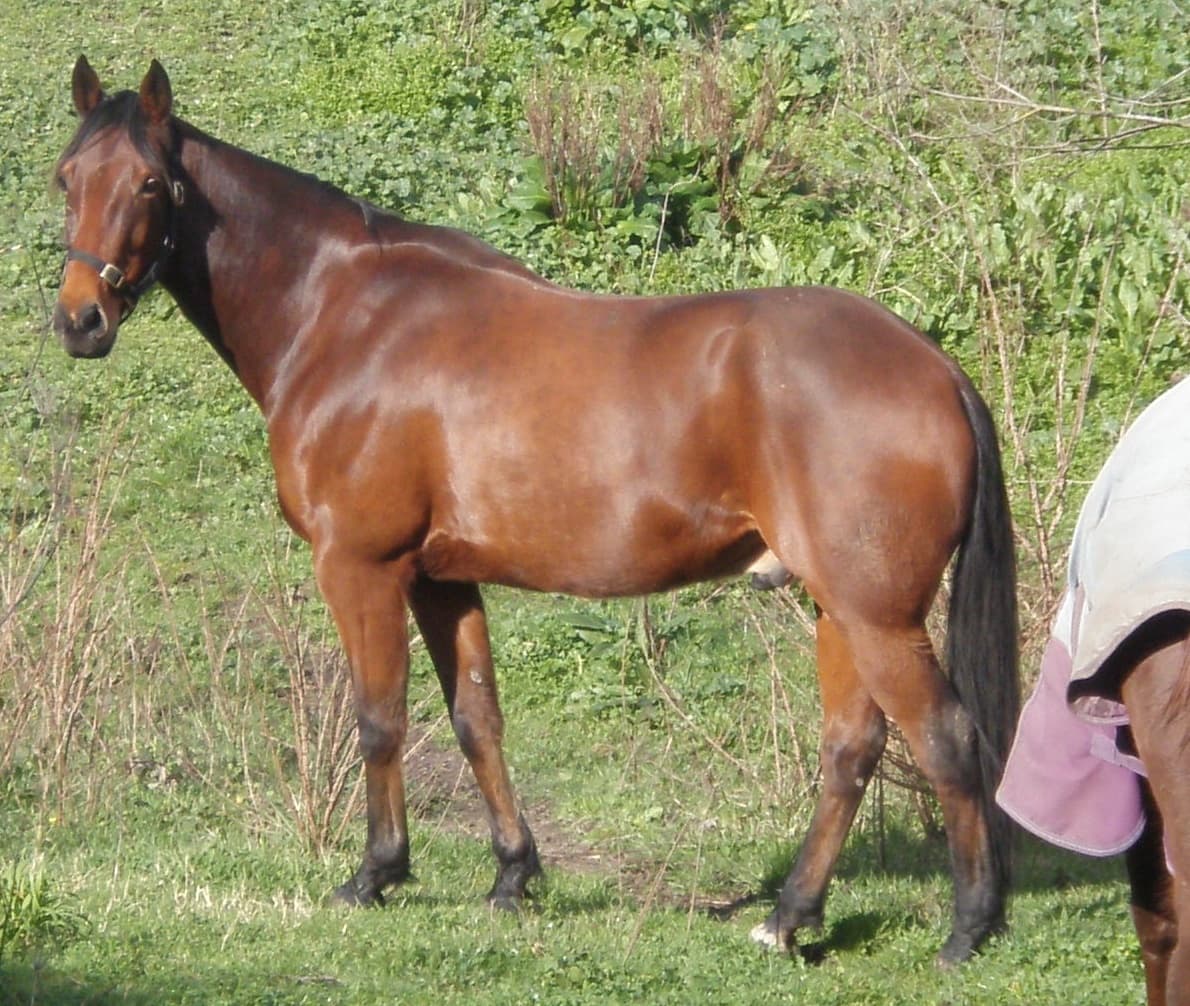
A Standardbred photographed at pasture.

The Standardbred name comes from an early speed requirement
Early registration rules used a qualifying time over one mile to admit horses. This performance standard gave the Standardbred its name. Important ancestors include the Thoroughbred Messenger, imported to the United States in the eighteenth century, and his descendant Hambletonian 10. Breeding continued to emphasise speed and the ability to maintain a racing gait. The name therefore refers to a historical registration criterion, not to a universal physical standard shared by all horse breeds.
Sources for this section: USTA [1]
Standardbreds race at either the trot or the pace
At the trot, diagonal limbs move together: the left foreleg with the right hind leg, then the opposite pair. At the two-beat pace, the two limbs on the same side move together. Standardbreds are bred and trained to maintain the gait required for their event at speed. Racing preparation develops muscles for that work. A horse moving to another activity must learn different cues and sometimes a different balance, particularly when changing from pulling a sulky to carrying a rider.
Sources for this section: USTA [1]
Bay and brown are especially common in Standardbreds
The United States Trotting Association, or USTA, describes bay and brown as particularly common colours, although other colours occur. A bay horse has a brown to reddish body with dark mane, tail and lower legs, and its shade can vary considerably. Colour does not indicate whether a Standardbred will race as a trotter or a pacer. The variants influencing coat appearance and the abilities required for racing are different traits. A breed colour estimate should not be read as a measure of sporting aptitude.
Sources for this section: USTA [1]
Standardbreds can move into new activities after racing
Harness racing shaped the Standardbred. In a race, the horse pulls a sulky controlled by a driver. Owners and aftercare organisations also prepare Standardbreds for trail riding, dressage, endurance and pleasure driving. Retraining requires appropriate learning: racing experience does not mean a horse already understands a rider’s aids or the situations encountered on a group trail ride. Its possibilities depend on health, experience and the preparation provided. Some horses also enter leisure activities without ever having raced.
USTA registration combines identification and DNA parentage verification
In the United States, the USTA maintains the Standardbred registry. Its identification system uses microchipping and DNA analysis to verify recorded parents. The microchip identifies the animal; the parentage test compares genetic markers from the horse and its parents. These checks complement each other. They do not mean that every available colour or health test has been performed. Registry documentation also distinguishes a Standardbred from other populations bred for trotting races, including the separately registered French Trotter.
Sources for this section: USTA [2]
The 2022 coat study included 39 Standardbreds
Standardbreds are bred and raced in several countries. Avila and colleagues’ 2022 data included 39 horses identified as Standardbreds, and removal of close relatives did not reduce that number. This remains a small laboratory group. It is neither an annual foal count nor a worldwide census of living horses. The sample does not provide separately established coat frequencies for trotting and pacing populations. Its results should be read at the level actually reported by the study.
Sources for this section: Avila et al. (2022) [4] · USTA [1]
The calculator uses Standardbred coat variants, not speed data
A coat test searches for a specific DNA variant affecting colour or white markings. Frequencies observed in the study’s Standardbreds support some calculator estimates when a parent’s genotype is unknown. They do not predict racing speed, trotting or pacing ability, or future performance under saddle. Failure to observe a variant in the tested group does not prove its absence from the whole breed. An individual result provides more specific evidence of what that particular horse can pass on.
Sources for this section: USTA [2] · Avila et al. (2022) [4]
Sources and review date
Profile reviewed on .
Breed organisations document history, registration rules and uses. The 2022 study examined horses submitted for coat-colour testing; its results describe that sample, rather than a census of the breed.
- USTA — What is harness racing?
Conformation, height and movement considered during assessments.
- USTA — Microchipping and DNA
Registration requirements, studbook categories and verification of ancestry.
- USTA — Life after racing
Uses of the horses and activities offered by breed organisations.
- Avila et al. — Genes, 2022
Avila and colleagues (2022): coat variants, sample sizes before and after removing close relatives, and limitations of the laboratory sample.