
Breeds · breed profile
The Selle Français
Selle Français · SF
The Selle Français is a sport horse bred for jumping, quality of movement and responsiveness to its rider. It brings together several regional French breeding traditions, while allowing specific crosses under its studbook rules. The name identifies a horse registered in that studbook, rather than any riding horse born in France.
- Category
- Horse
- Country of origin
- France
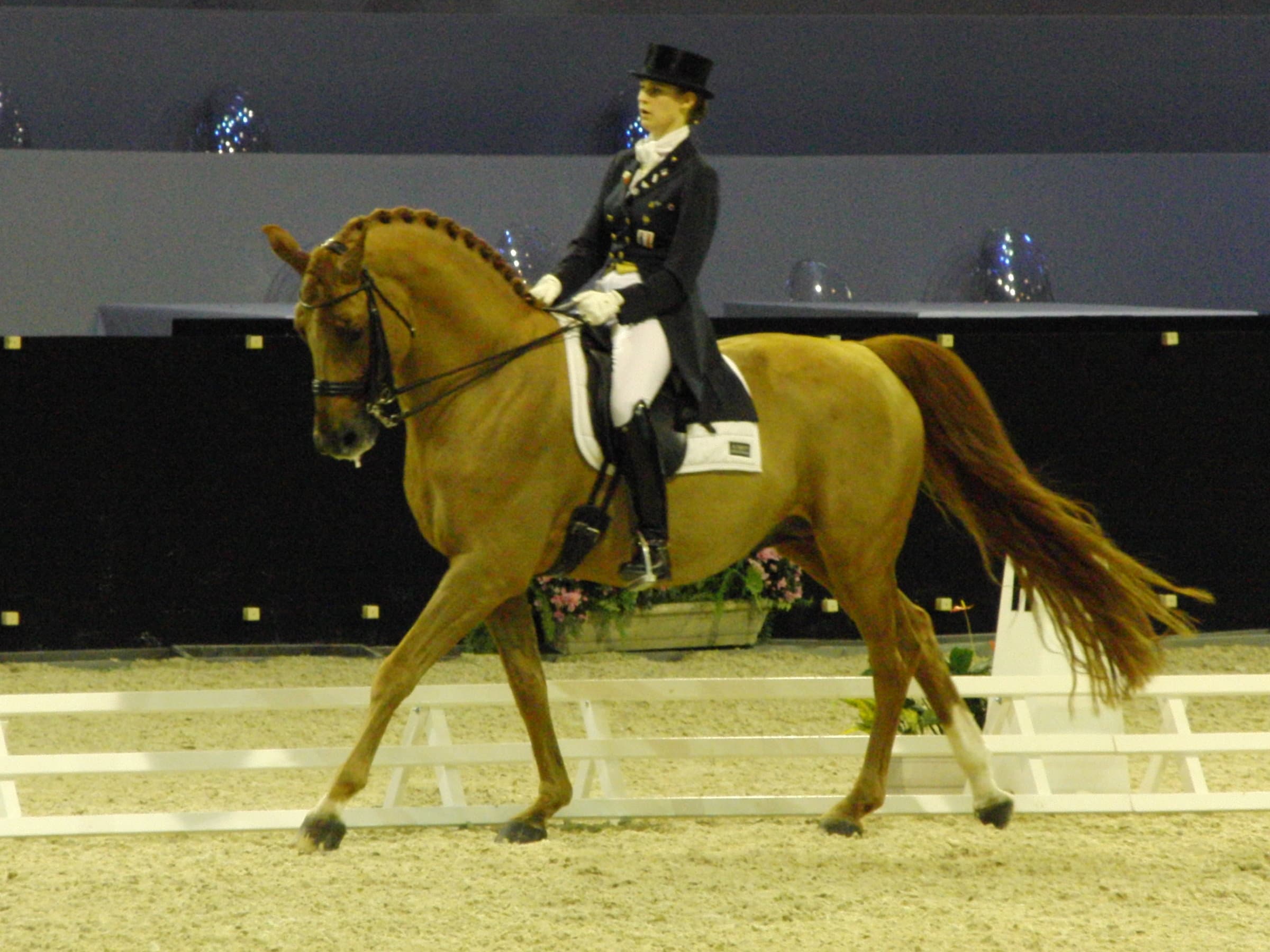
Selle Français stallion Mister Grand Champ with Camille Cheret Judet in dressage at the 2009 Paris Horse Show.

How regional breeding shaped the Selle Français
The Selle Français: Local mares and riding-horse bloodlines
Normandy, Vendée-Charente and central France, including the Charolais area, developed distinct breeding populations. Local mares were crossed with Thoroughbreds and horses descended from those crosses. These regional populations supplied riding horses and maintained their own records of ancestry.
The Selle Français: a breed brought together in 1958
The regional studbooks were brought together in 1958 to form the Selle Français breed. The current programme distinguishes this event from the establishment of the Selle Français Stud-Book in 1963. A studbook records horses and their parents, allowing families to be traced through successive generations.
The Selle Français: Selection for equestrian sport
The growth of competition directed breeding towards show jumping, eventing and dressage. Today's programme combines competition results with conformation, movement, health and career longevity. It also seeks to retain original French bloodlines within a studbook that accepts specified outside contributions.
Sources for this section: SF Stud-Book [1] · Selle Français [2]
What the Selle Français assessment looks for
The Selle Français: Conformation that supports movement
Stud-Book Selle Français describes the desired traits of the Selle Français in its breeding programme. This document guides the choice of breeding animals. The studbook assessment considers neck position, shoulder, withers, the strength of the back and loins, and the length and musculature of the croup. Legs, joints, feet and limb alignment are assessed for function. Together, these features should support the balance and movement needed in a sport horse.
The Selle Français: Assessment in hand and in action
Breeding shows assess conformation and movement, then performance according to the horse's age and assessment scheme. A horse may be seen standing, moving and jumping. Several qualities contribute to the assessment; height or a placing in one competition cannot capture the whole picture.
Sources for this section: SF Stud-Book [1]
Coat colour and Selle Français identification
The Selle Français: Colour helps describe an individual
Coat colour forms part of a horse's identification record, alongside white markings and other distinguishing features. Studbook entry depends on ancestry and admission rules rather than colour. The stallion pictured here is chestnut, a colour also found in many other breeds.
The Selle Français: What coat-colour results can tell breeders
The genomic programme plans to provide information about certain coat-colour variants. These results help explain which variants a stallion may pass to his foals. They describe the variants tested in that individual and do not, by themselves, establish how common each colour is throughout the breed.
Sources for this section: SF Stud-Book [1]
The Selle Français in equestrian sport
The Selle Français: Completing a show-jumping course
In show jumping, the horse negotiates a sequence of fences, stays balanced through turns and adjusts its stride between jumps. Selection considers jumping technique, power and responsiveness to the rider, assessed during training and competition.
The Selle Français: Eventing and dressage
Eventing combines a dressage test, an outdoor cross-country course and show jumping. Dressage assesses precise movements, quality of paces and response to the rider's aids. These different demands explain why the SF programme follows several abilities and competition pathways.
Sources for this section: SF Stud-Book [1] · Selle Français [2]
How a horse enters the Selle Français studbook
The Selle Français: Registration of foals
The Selle Français Stud-Book runs the selection programme and delegates identification procedures to IFCE. Registration by descent requires an SF-approved sire and an eligible dam: an SF mare, an SF-labelled mare or a mare from one of the founding breeds listed in the rules. Covering records, birth notification and identification complete the application.
The Selle Français: Checking the recorded parents
The dam must be DNA typed before her first SF foal is registered. The rules require parentage verification for foals conceived through an artificial reproductive method. The laboratory compares the foal's DNA with that of the recorded parents to establish whether the proposed relationship is compatible.
The Selle Français: Stallion approval is a separate step
An SF-registered male is not automatically approved to sire SF foals. Approval involves his records, conformation and ability, together with the required health documentation. Radiographs and, for new approvals from 1 August 2025, a genomic test must be supplied to finalise approval.
Sources for this section: SF Stud-Book [1]
Where Selle Français horses are bred and counted
The Selle Français: Breeding across France
Normandy remains important, alongside Pays de la Loire, Brittany, Auvergne-Rhône-Alpes, Grand Est and Nouvelle-Aquitaine. The programme covers France and other European Union countries. Exports and breeding also spread these bloodlines beyond their original regions.
The Selle Français: 8,437 registered foals in 2023
The Selle Français breeding programme reports 8,437 SF foals registered in France for 2023, using an IFCE data extract dated 23 September 2024. This measures one year's contribution to the breed. It is not a count of all living Selle Français horses, many of which were born in earlier years.
Sources for this section: SF Stud-Book [1]
The Selle Français: What genomic testing means for SF stallions
The Selle Français: Reading many variable sites in DNA
A genomic test uses a chip to examine many variable positions in DNA, known as SNPs. The programme plans to use these data for genetic evaluations, selected health and colour traits, and family diversity. They add information to pedigrees and performance records.
The Selle Français: Testing is required regardless of the result
Annex IV applies to stallions approved from 1 August 2025; previously approved stallions may participate voluntarily. Testing and sharing the results are required to finalise approval, whatever the findings. A detected variant must therefore be interpreted in relation to its effect and the proposed mare. Testing does not certify freedom from every disease.
Sources for this section: SF Stud-Book [1]
Sources and review date
Profile reviewed on .
The selection programme published by IFCE is dated April 2025, although some pages retain a January 2025 footer. Annex IV sets out the new genomic testing requirement. The breeding figures quoted relate to 2023.
- Selle Français selection programme, version dated 1 April 2025
History, conformation assessment, registration, 2023 figures and Annex IV on genomic testing.
- Selle Français Stud-Book — the breed
The breeding organisation's presentation and sporting context.