
Breeds · breed profile
Oldenburg
Oldenburg breeding includes distinct dressage and jumping programmes
The Oldenburg is a sport horse developed in north-western Germany. Modern breeding accepts varied ancestry while selecting for sporting ability. The Oldenburg organisation brings together two associations: OL, now mainly focused on dressage, and OS, focused on jumping. Each follows its own breeding rules. The name Oldenburg alone therefore does not tell readers the exact registry in which a particular horse is recorded.
- Category
- Horse
- Country of origin
- Germany
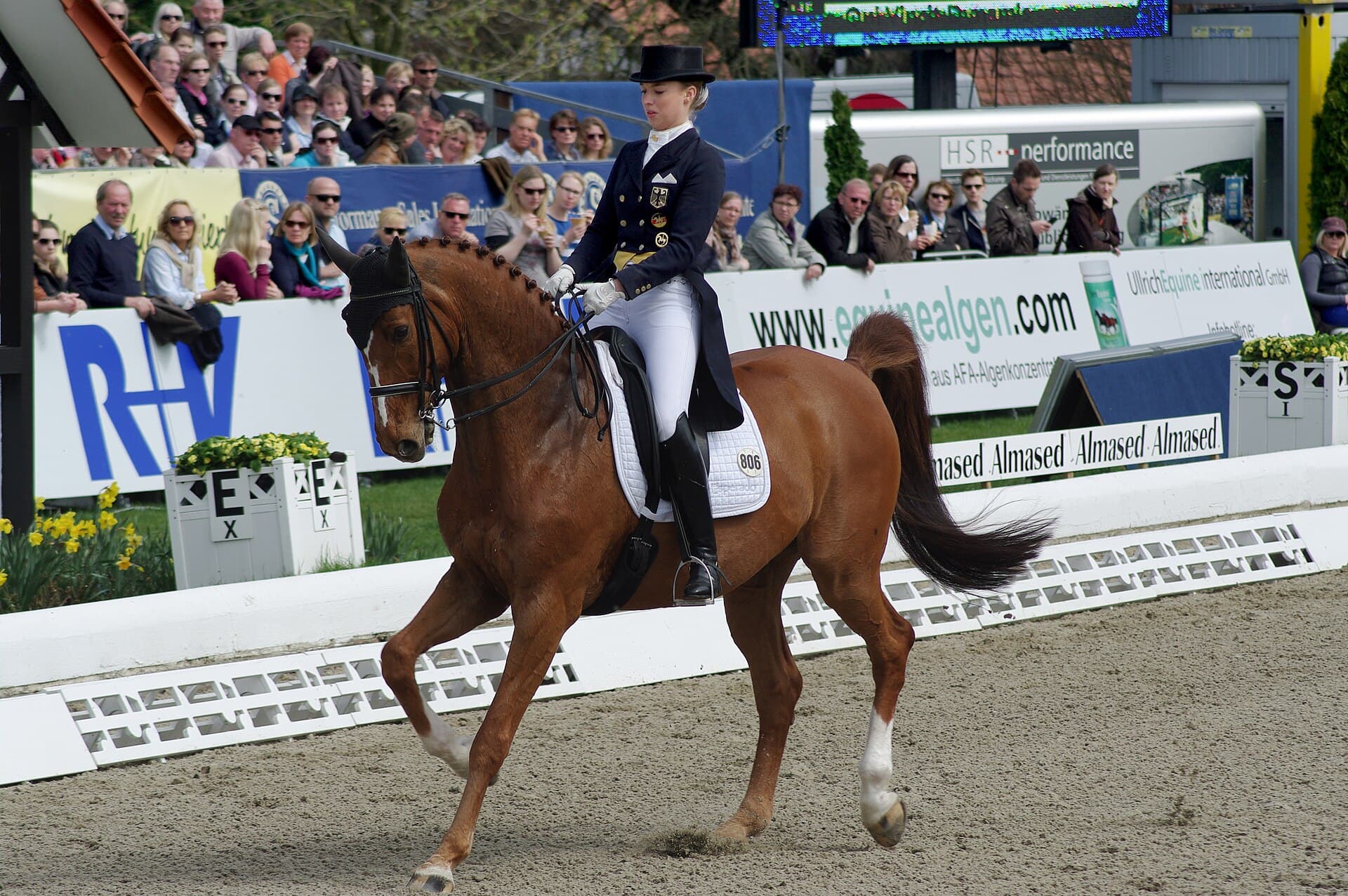
The Oldenburg Qui Vincit Dynamis ridden by Fabienne Lütkemeier in dressage in 2013.

Oldenburg breeding changed from carriage horses to sport horses
Horse breeding in the Oldenburg region has a long history, including the seventeenth-century work of Count Anton Günther. Carriage horses were an important part of its earlier identity. During the twentieth century, declining demand for agricultural and transport horses changed breeders’ priorities. Thoroughbred and other outside ancestry helped develop the modern riding horse. The specialist jumping association OS was founded in 2001 and is distinct from OL. This history explains both the regional name and the separate programmes operating today.
Sources for this section: Oldenburger Verband [1]
Oldenburg assessments examine build and performance separately
Inspectors assess a horse’s conformation, limbs and movement. Mare registration also involves checking height and identifying features. Performance tests add evidence from work, such as dressage, free jumping or jumping under saddle, depending on the test chosen. Those results are not interchangeable with a conformation score. An attractive outline does not itself demonstrate aptitude for a particular discipline. The different assessments help breeders distinguish what can be seen while standing or moving in hand from what a horse shows during work.
Sources for this section: Oldenburger Verband [3]
Coat colour does not distinguish Oldenburgs from other sport horses
Bay, chestnut, black and grey occur among sport-horse populations, including Oldenburgs. These colours do not identify a horse’s studbook. The 2022 genetic study records coat variants in horses submitted under the name Oldenburg, but it is not an official list of colours admitted by OL or OS. Registration and breeding decisions should refer to the relevant association’s programme. A DNA coat result can identify a variant carried by a horse without establishing which registry recognises its ancestry.
Sources for this section: Avila et al. (2022) [5]
Oldenburgs are bred for dressage and jumping
OL currently describes its breeding as mainly focused on dressage. OS selects horses for jumping, as well as eventing and versatile uses with an emphasis on jumping ability. Oldenburgs also serve amateur and leisure riders. The FEI record for Qui Vincit Dynamis, pictured here, identifies his studbook as OLDBG and documents his dressage career. That is an example of one horse’s achievements, not a performance level that can be assumed for every horse registered with the Oldenburg associations.
Sources for this section: Oldenburger Verband [2] · FEI [4]
OL and OS allow selected ancestry from other studbooks
OL and OS each maintain a studbook recording horses and their parents. Both permit contributions from recognised outside populations under their respective breeding rules. Pedigree checks, identification and assessments support registration. The procedures for registering a mare and approving a stallion are not identical. Understanding a horse’s status therefore requires the association name and registration category on its papers. Shared ancestry with another sport-horse population does not make the two registries or their selection procedures interchangeable.
Sources for this section: Oldenburger Verband [2] · Oldenburger Verband [3]
Oldenburg breeding extends beyond its German region of origin
The Oldenburg organisation works with breeders abroad, and its history includes the development of North American activities. Birthplace alone consequently does not determine a horse’s studbook. The 2022 coat study included 46 horses labelled Oldenburg, with 34 retained after close relatives were removed. The publication does not divide this group into OL and OS horses. Its results should therefore not be presented as separate estimates for those two associations, or as a worldwide count of registered Oldenburgs.
Sources for this section: Oldenburger Verband [1] · Avila et al. (2022) [5]
Oldenburg coat tests and sporting selection provide different information
A coat test looks for variants affecting pigment or white markings. Frequencies from the 2022 sample can support estimates of unknown genotypes, but may not represent every OL and OS breeding population. Sporting selection uses different evidence, including results from horses and their relatives. Pedigrees help connect that information and track families over generations. A colour result alone cannot predict a future foal’s dressage or jumping ability. It answers a narrower question about the variants the individual horse may pass on.
Sources for this section: Avila et al. (2022) [5] · Oldenburger Verband [2]
Sources and review date
Profile reviewed on .
Breed organisations document history, registration rules and uses. The 2022 study examined horses submitted for coat-colour testing; its results describe that sample, rather than a census of the breed.
- Oldenburger Verband — History
The breed’s history and the development of its breeding organisation.
- Oldenburger Verband — The association
Registration requirements, studbook categories and verification of ancestry.
- Oldenburger Verband — Mares
Conformation, height and movement considered during assessments.
- FEI — Qui Vincit Dynamis (OLDBG)
Sport record of the horse in the photograph: identity, OLDBG studbook and results.
- Avila et al. — Genes, 2022
Avila and colleagues (2022): coat variants, sample sizes before and after removing close relatives, and limitations of the laboratory sample.