
Breeds · breed profile
Criollo
The Criollo, a working horse descended from Iberian horses in South America
The Criollo developed from horses introduced by Europeans to South America and subsequently bred in varied environments. Its history is closely connected with cattle work. The French studbook recognises origins documented by major South American studbooks.
- Category
- Horse
- Country of origin
- South America
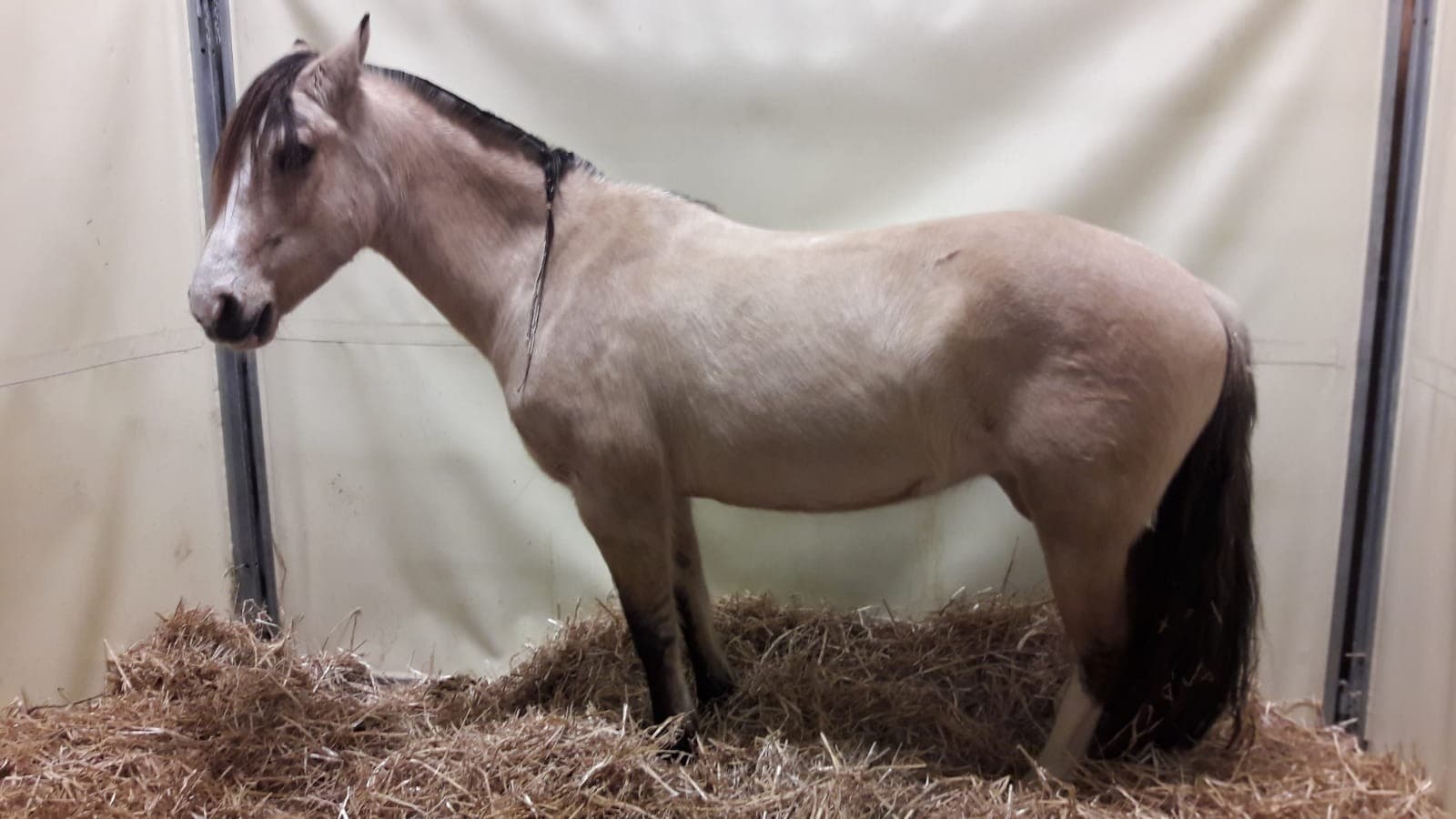
A Criollo horse at the 2019 Paris International Agricultural Show.

The Criollo: From colonial horses to organised breeding
Horses of Iberian origin formed the basis of local populations used for travel and extensive livestock farming. Cattle workers, including gauchos, shaped their practical use. Early twentieth-century breeding initiatives, notably Emilio Solanet's work in Argentina, organised the preservation of the Criollo type. This history spans several countries rather than a single territory or bloodline.
Sources for this section: AFECC [1]
The Criollo: a compact horse with strong support
Association française des éleveurs de chevaux Criollo (AFECC) describes the desired traits of the Criollo in its breeding programme. This document guides the choice of breeding animals. The French standard describes a muscular, compact horse with a low centre of gravity. It has a relatively short, broad head, a medium-length neck, a short powerful loin and developed hindquarters. Short cannons and sound feet support changes of direction. The usual height ranges are 1.40–1.48 m for males and 1.38–1.46 m for females, with defined exceptions; the desired type is around 1.44 m.
Sources for this section: AFECC [1]
The Criollo: Colour rules differ between countries
Criollos display a wide range of colours and markings. The French programme accepts tobiano horses from recognised studbooks, whereas the Argentine studbook has its own restrictions. Tobiano describes a pattern of white patches across the coat. A rule from one country should therefore not be presented as a ban applying to every Criollo population.
Sources for this section: AFECC [1]
The Criollo: Cattle work and functional tests
Working around cattle requires controlled acceleration, stops and changes of direction. South American working and endurance tests continue this practical selection. In France, Criollos are also used for trail riding and working equitation. Training and the individual horse's experience determine how well it is prepared for a particular activity.
Sources for this section: AFECC [1]
The Criollo: a French studbook connected to South America
The Association française des éleveurs de chevaux Criollo (AFECC) runs the French programme. Recognition in France dates to 2012 and the French studbook's organisation to 2018. Accepted ancestry includes recognised studbooks in Argentina, Uruguay, Brazil and Paraguay. Breeding approval combines pedigree documents with inspection, generally from three years of age.
Sources for this section: AFECC [1]
The Criollo: French births in 2023
The Criollo breeding programme published in 2025 reports 47 births in France for 2023. This is one year's production in the French studbook, rather than South American population size or the number of all Criollos in France. A recently established national population can include imported horses alongside descendants bred locally.
Sources for this section: AFECC [1]
The Criollo: DNA parentage connects records with individual horses
The parentage check required for births compares the foal's genetic markers with those of its declared parents. It supports continuity between recognised studbooks and French-born generations. Conformation inspection supplies different evidence about the horse's build and compliance with the standard. Typical movement or coat markings cannot replace a verified pedigree.
Sources for this section: AFECC [1]
Sources and review date
Profile reviewed on .
The documents below were used to prepare this profile of the Criollo. They explain which animals can enter the studbook and how breeding animals are selected.
- Criollo — Programme de sélection (publication IFCE 2025)
Studbook document covering selection, registration, breeding assessments and dated figures where available.