
Breeds · breed profile
The Boulonnais
Cheval Boulonnais
The Boulonnais is a draught horse from the Boulogne-sur-Mer region. Its history combines fast fish transport with heavy farm work. Today, the Syndicat hippique boulonnais works to maintain births and families in this small population while developing driving and working opportunities.
- Category
- Horse
- Country of origin
- France
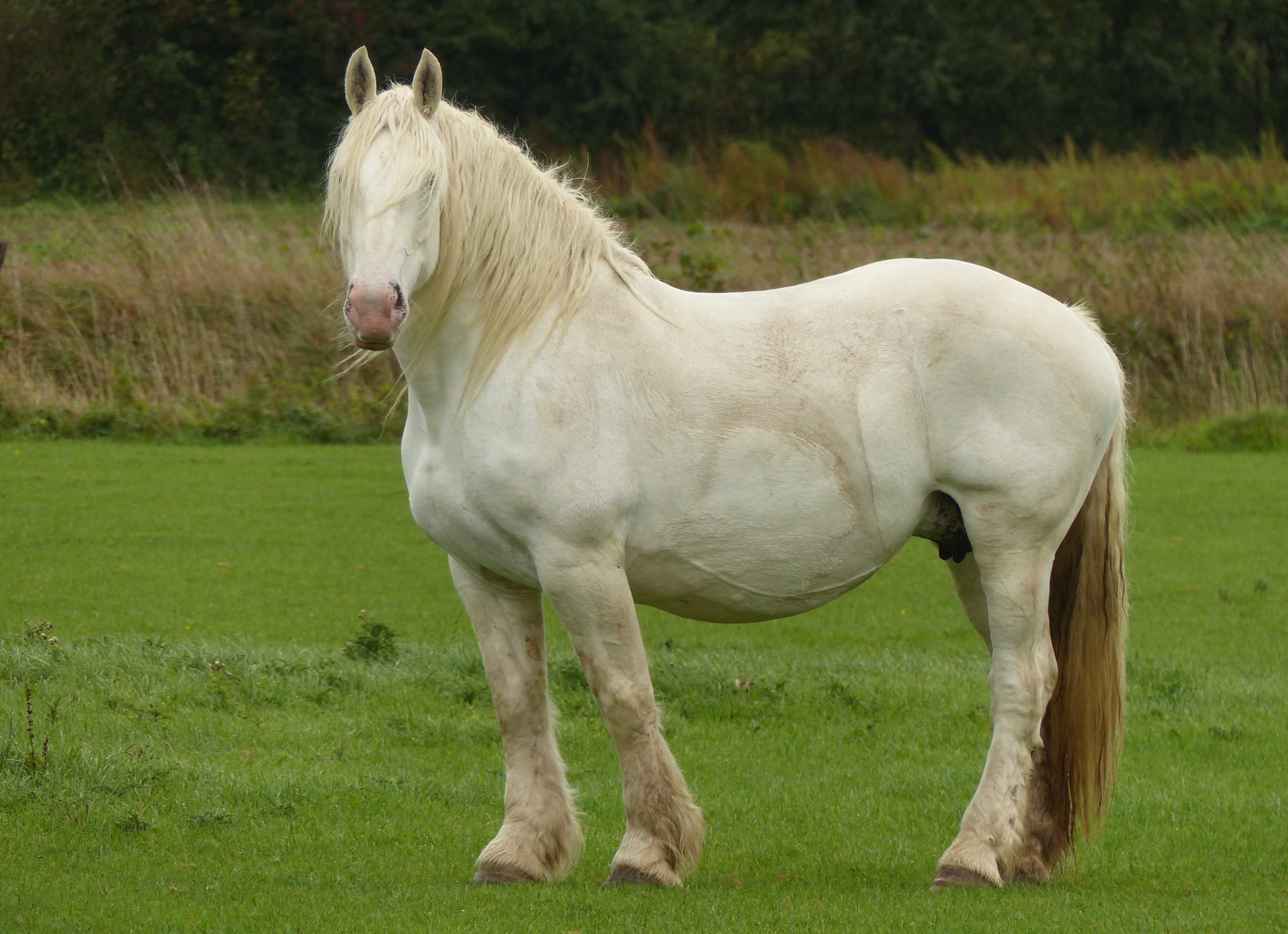
A Boulonnais mare photographed at Samer, Pas-de-Calais, in September 2018.

The Boulonnais between coast and farmland
The Boulonnais: the region around Boulogne-sur-Mer
Western Pas-de-Calais, particularly around Marquise and Desvres, is the breed's home region. Breeders developed horses for different jobs there. Transport between the coast and inland markets, together with agricultural work, shaped the types described in the breeding programme.
The Boulonnais: Mares that carried the fish trade
A lighter, faster type transported fish from Channel ports towards Paris. These horses had to maintain a brisk pace with their loads. The French term mareyeuse recalls that trade, which is celebrated today through driving events associated with the Route du poisson.
The Boulonnais: More power for agricultural work
In the nineteenth century, cultivating beet-growing land and transporting crops favoured larger, stronger horses. Mechanisation later reduced demand for animal traction. Keeping the breed viable now involves several markets and measures to conserve its families.
Sources for this section: Syndicat hippique boulonnais [1]
The Boulonnais's desired conformation
The Boulonnais: Power with mobility
Syndicat hippique boulonnais describes the desired traits of the Boulonnais in its breeding programme. This document guides the choice of breeding animals. The Boulonnais breed standard describes an expressive head, long and well-set neck, open chest and broad back without excessive stiffness. The croup is long and muscular. Joints should be clearly defined and feet broad; assessing limbs and movement together helps retain a useful working horse.
The Boulonnais: Different builds for different tasks
The Boulonnais breeding programme's breed description gives a height of 1.60–1.78 m and weight of 650–900 kg. These figures describe the variety of types historically selected for different work. Breeding assessments also consider conformity to the standard and functional movement.
Sources for this section: Syndicat hippique boulonnais [1]
Why many Boulonnais horses become very pale
The Boulonnais: Grey predominates but is not the only colour
The Boulonnais breeding programme describes grey as prevalent and also mentions chestnut horses. Many adults become very pale as their hair progressively loses pigment. This does not mean every foal is born white or that its genetic variants can be determined from a photograph.
The Boulonnais: Grey acts on a pigmented birth coat
Greying can affect different base colours. A pigmented foal develops white hairs over time and may eventually look almost entirely white. A grey presence test detects the variant responsible for this change; determining copy number and variant type requires a more detailed analysis.
Sources for this section: Syndicat hippique boulonnais [1] · UC Davis [2]
Present-day Boulonnais uses
The Boulonnais: Driving and pulling work
Leisure driving, demonstrations and pulling competitions continue the breed's working tradition. Horses may also be trained for agricultural tasks or community services. Selection considers strength, movement and a temperament that allows cooperation with the driver.
The Boulonnais: Markets that help sustain breeding
Meat production remains one of the markets mentioned in the programme, alongside using trained horses. Shows, training and promotion support breeders. Conservation also depends on replacing breeding mares and stallions so that several families contribute new foals.
Sources for this section: Syndicat hippique boulonnais [1]
Boulonnais registers A and B
The Syndicat hippique boulonnais manages the studbook
The studbook records horses and parents, with registers for breeding animals and foals. Coverings and births must be declared, followed by identification. Dams must be DNA typed before their first foal is registered, and stallion candidates require parentage verification.
The Boulonnais: Register B allows regulated crosses
Register A contains horses meeting its ancestry and admission requirements. Register B includes specified crosses with Arabians and certain initial admissions. It is part of the Boulonnais studbook, rather than simply a register of horses with unknown ancestry.
The Boulonnais: Moving from register B to register A requires approval
A register B horse can be presented from age two if it has at least 75% Boulonnais ancestry, a pedigree known for at least three generations and strict conformity to the standard. The committee decides on admission. This route introduces families while retaining the desired breed characteristics.
Sources for this section: Syndicat hippique boulonnais [1]
The Boulonnais: Breeding concentrated in Hauts-de-France
The Boulonnais: the home region is central to conservation
Most births tracked by the programme occur in Hauts-de-France, although breeders also operate elsewhere in France and abroad. The programme amended in 2025 describes the breed as threatened because of its low numbers and places its work within regional conservation and development plans.
The Boulonnais: Reading the 2022 birth figures by region
The chart records 137 births in Hauts-de-France and 17 in other French regions in 2022, combining registers A and B. It includes registered foals and those declared dead before registration. These figures track recorded births rather than all living Boulonnais horses.
Sources for this section: Syndicat hippique boulonnais [1]
The Boulonnais: Conserving families and preparing future research
The Boulonnais: Choosing less closely related parents
Repeated use of the same stallions in a small population increases shared ancestry. The programme uses mating advice and regulated admission through register B to retain diversity. The aim is to keep several families contributing to future generations while meeting breed objectives.
The Boulonnais: Parentage checks and stored samples
Parentage testing compares a horse's DNA with that of its recorded parents to strengthen pedigree reliability. The 2025 programme also plans to retain part of blood samples in a biobank, a collection available for future research. Storing a sample enables research; it is not itself a health-screening result.
Sources for this section: Syndicat hippique boulonnais [1]
Sources and review date
Profile reviewed on .
The Syndicat hippique boulonnais programme was amended in October 2025. It distinguishes registers A and B and explains which births are counted. Grey-coat explanations draw on the UC Davis laboratory.
- Boulonnais selection programme, amended October 2025
History, conformation, registers A and B, births by region, conservation and the biobank.
- Veterinary Genetics Laboratory — Gray Presence/Absence
Progressive greying and the distinction between presence testing and detailed copy analysis.